

.svg)

How is the Library structured?
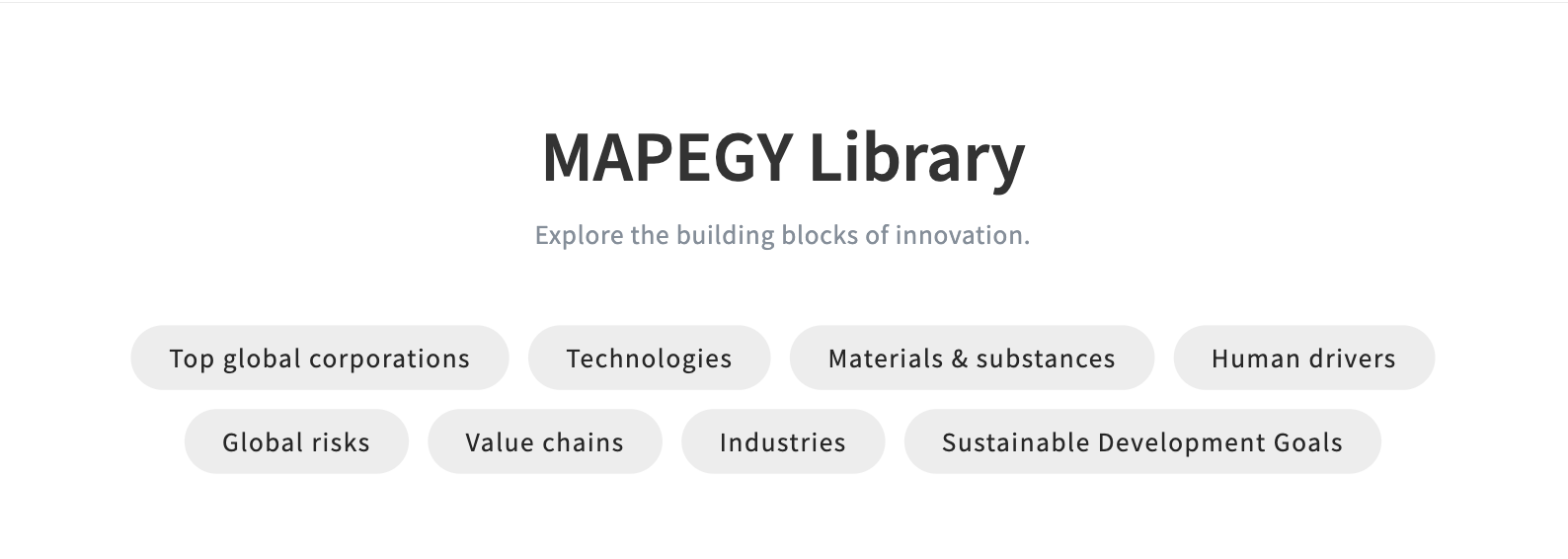
The Library is organized into 8 blocks, connecting technologies, markets, needs, risks, players, value chains, and sustainability goals.
Each block contains subcategories you can browse, search, and compare.
Innovation isn’t a straight line; it’s a network of materials, people, industries, and pressures. The Library captures that network through hundreds of concise reports per block, each adapted to its context while remaining comparable.
Explore the links below to learn more about each category.
- Top global corporations. Top 200 global corporations shaping markets and standards. Use it to track strategies, investments, IP footprints, and market influence of the world’s largest players.
- Technologies. The capabilities that power products and processes. Use it to see growth signals, adoption pathways, and corporate/startup activity.
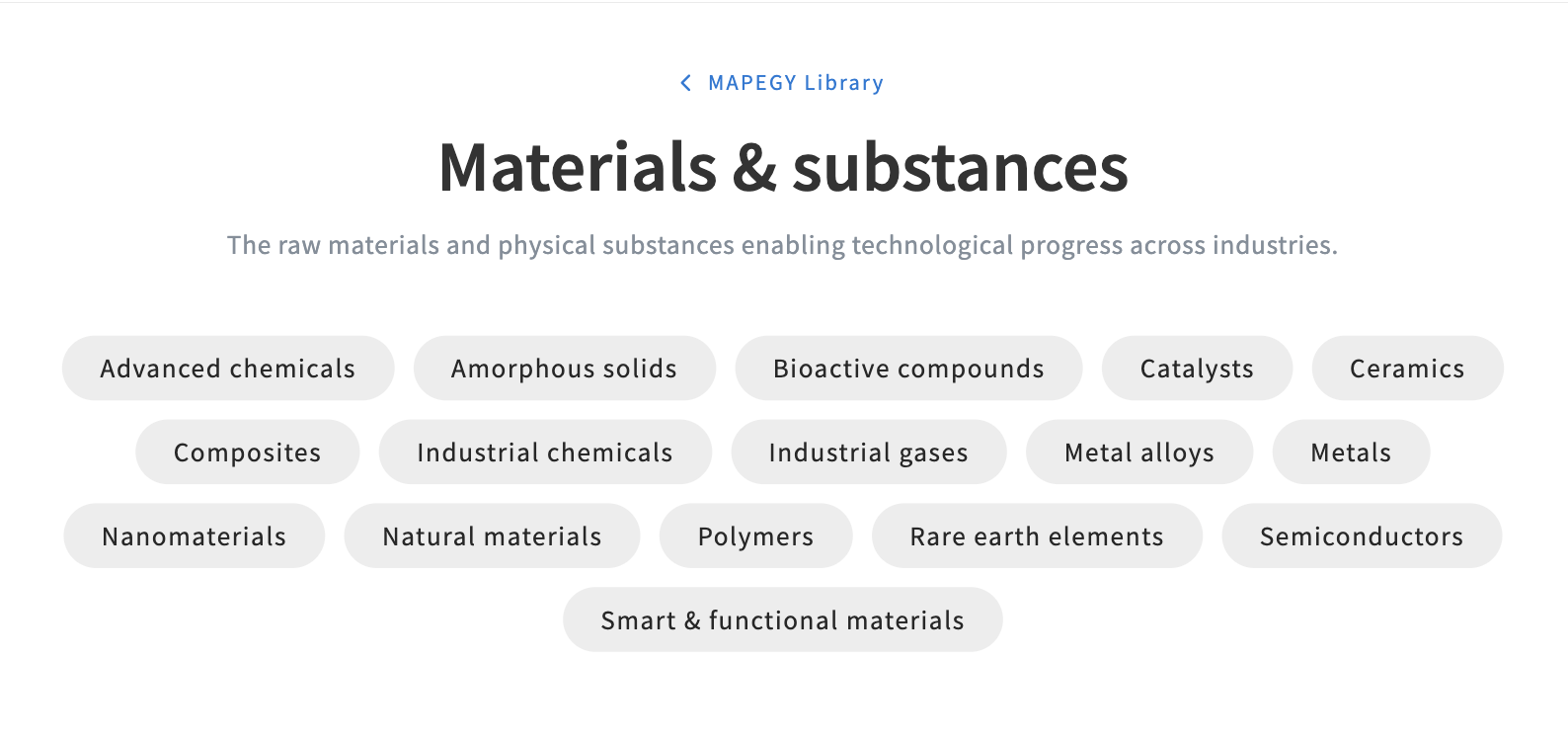
- Materials & Substances. Physical enablers behind breakthroughs. Use it to monitor bottlenecks, availability, and cross‑links to technologies and industries.
- Human Drivers. Demand‑side drivers of adoption and investment. Use it to align solutions with real‑world needs and user experience constraints.
- Global Risks. Constraints shaping strategy (aligned with the World Economic Forum risk taxonomy). Use it to understand accelerants or brakes on innovation trajectories.
- Value Chains. How innovation creates, delivers, and captures value across production systems. Use it to locate opportunities, bottlenecks, and leverage points.
- Industries. Where innovation scales and value is captured (mapped to NACE‑like industry classes). ~90+ industries (e.g., Automotive, Aerospace, Healthcare, ICT, Energy, Construction, Chemicals). Use it to track adoption dynamics, competitive footprints, and sector‑specific investment.
- Sustainability Goals (UN SDGs). 17 UN goals, each connected to relevant technologies, industries, and players. Align innovation with impact and public/private funding priorities.
Related articles